Asurion – 2026
Remote Tech for uBreakiFix
Helping uBreakiFix stores manage in-home repairs with a new platform design
The Context
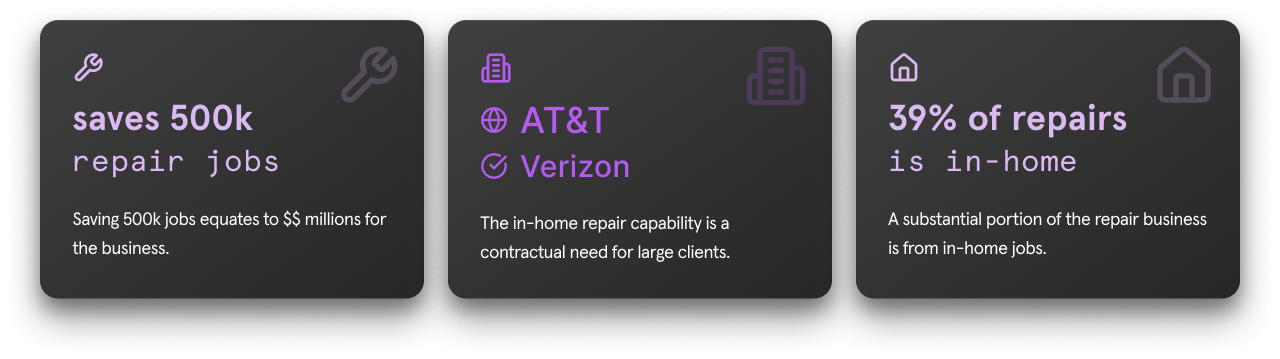
The business couldn’t afford to lose in-home jobs
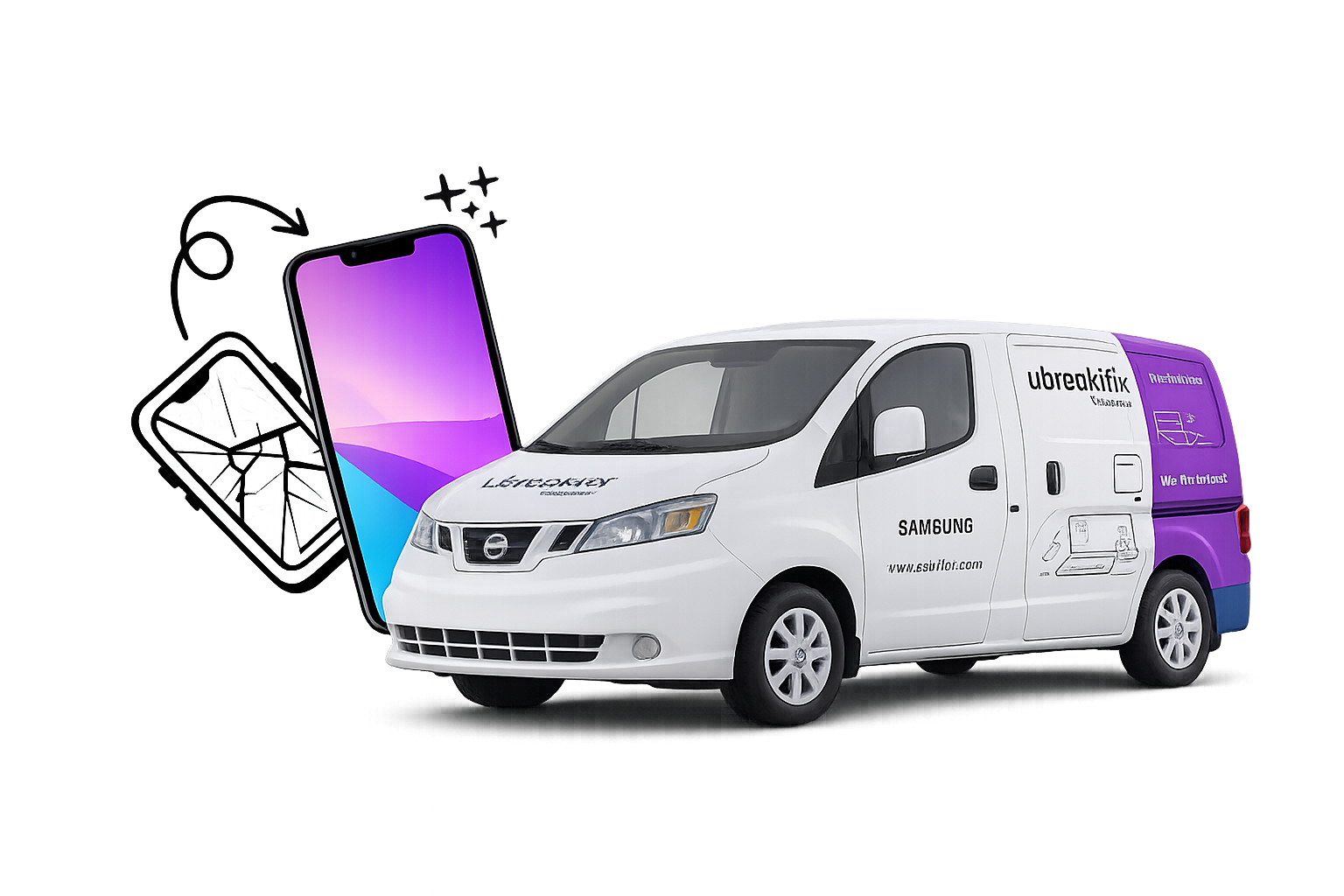
Remote Tech is a service that allows customers to receive device repairs at home instead of visiting a store. These repairs happen in a technician’s van, and the tech uses software called Portal to complete the job from repair to payments.
If the new platform design did not include workflows for these in-home jobs, over 500k jobs would be unserved.
The Challenge
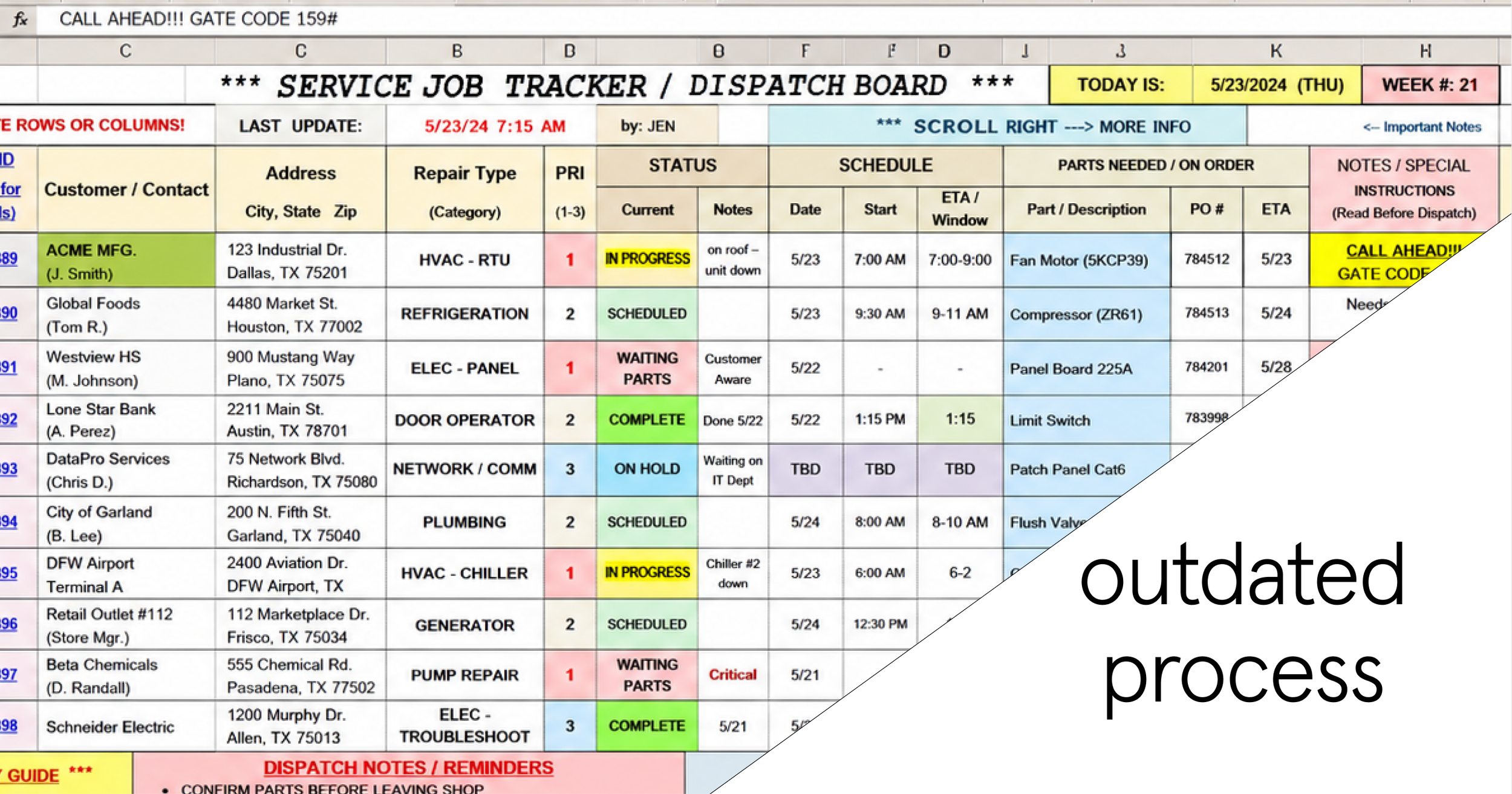
Too many systems were using outdated processes
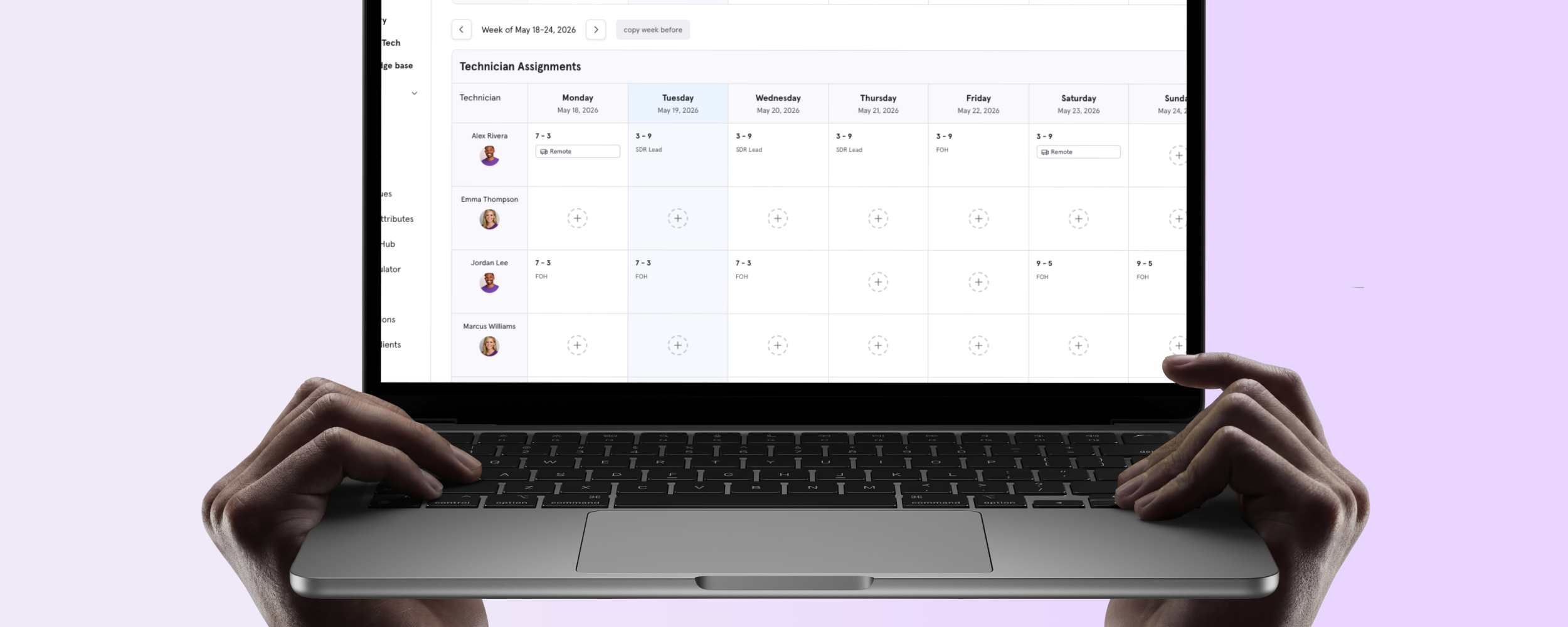
Remote Tech jobs were being managed across disconnected tools. The mission was to replace the outdated processes and create a single integrated scheduling tool.
Yes, calendars were being maintained on Excel sheets.
Operations had to jump between tools to manage one repair journey, making technician availability difficult to coordinate. Manual support teams had to step in when systems were broken.
My Role as Senior Design Lead
Turning complexity into a product direction
I spent over six years deeply embedded in the Field App, understanding the user needs. Using this historic expert knowledge, I guided product, engineering, and operations partners when aligning on workflow direction.
Focusing on inventory management and scheduling capacity, I worked closely with Operations to define the technician workflows and translate a complex service model.
Systems Thinking
One workflow, many moving systems
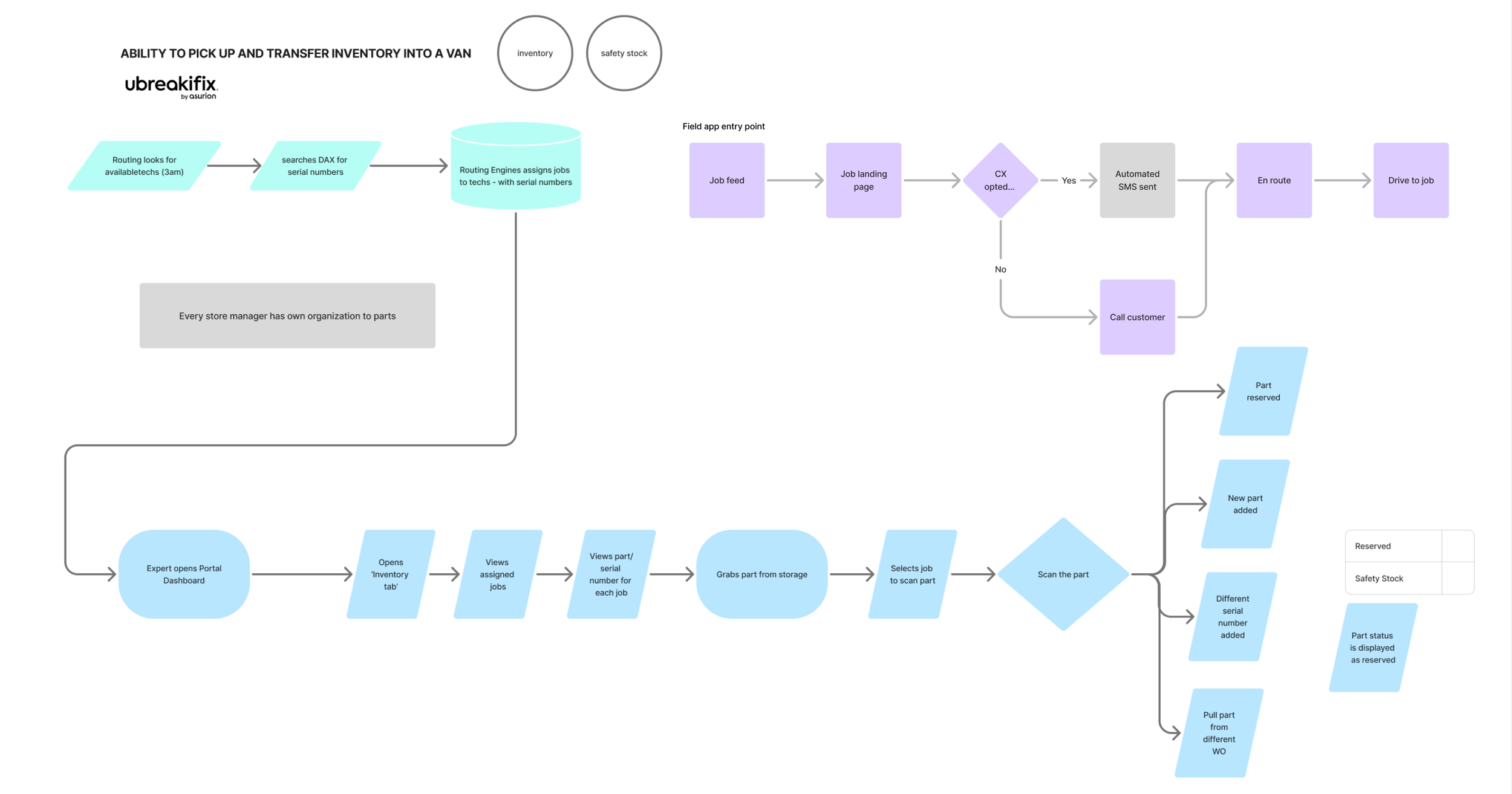
Remote tech repair jobs consisted of more than one system. It touched job intake, technician availability, routing, van inventory, repair completion, payment collection, and most importantly, reporting.
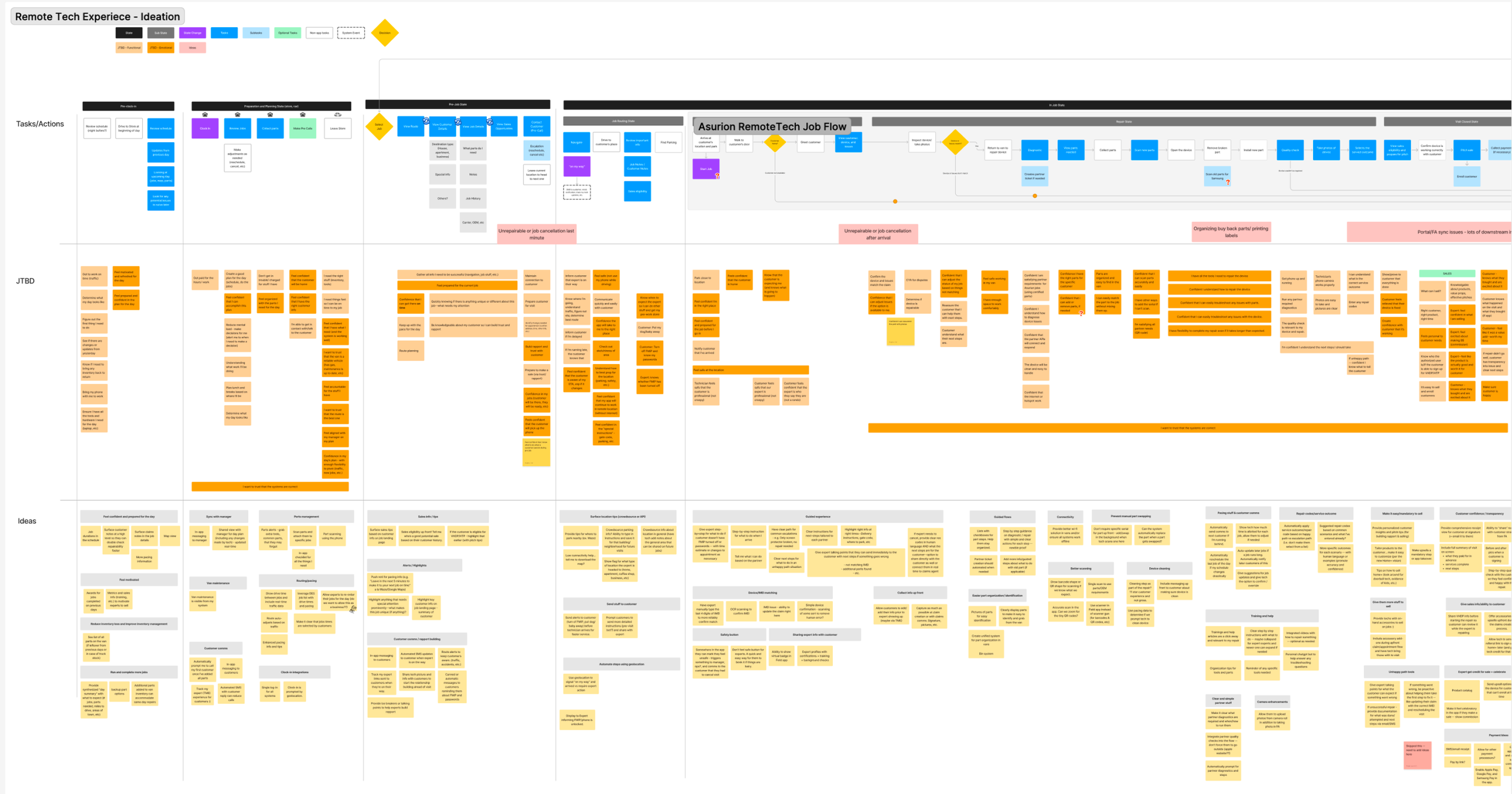
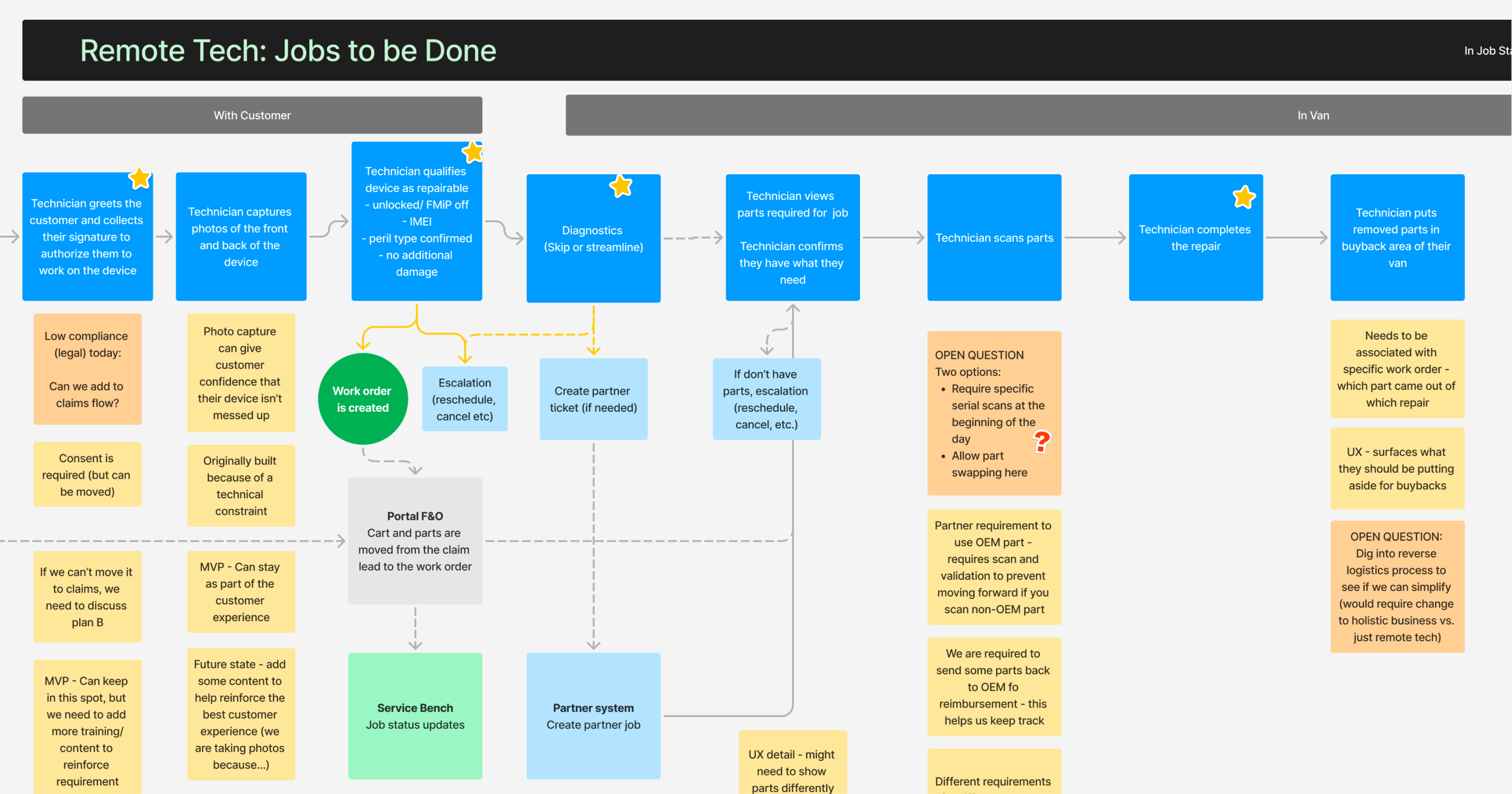
I went broader to understand and align on the system pain points. To set the foundation, I created a service blueprint and end -to-end journey map and looked across the full ecosystem to understand the job from when a customer makes a claim to repair completion. I mapped out what was the job to be done, and the user emotion behind the requirement.
Key Features
Calendar and inventory took top priority
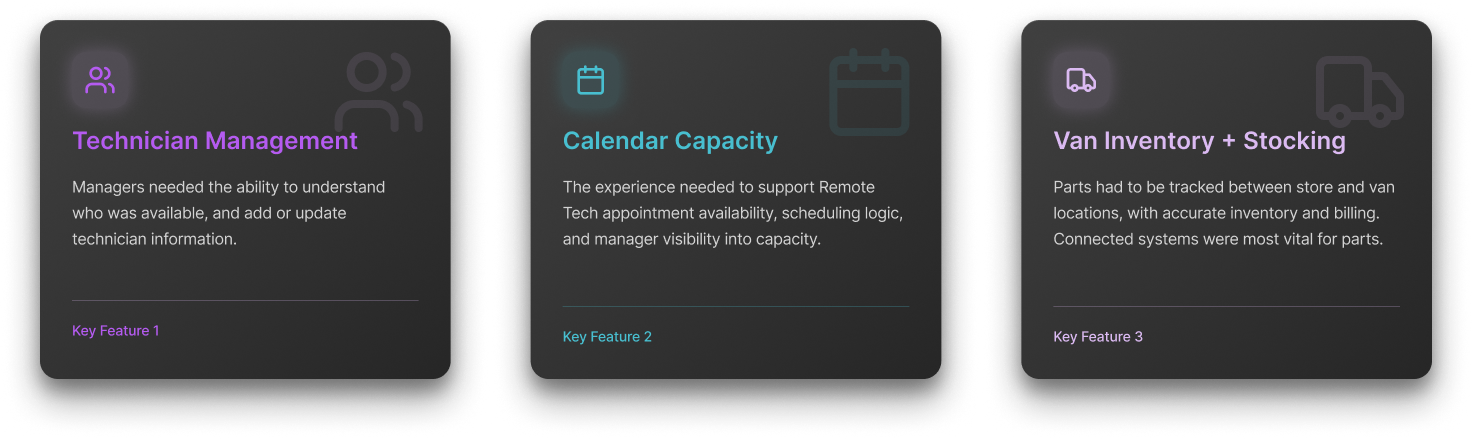
Based on the mapping, we focused on the actions that mattered most. Technician availability was the foundation of every Remote Tech job, which made scheduling and capacity a top priority. Parts availability was equally critical, making inventory a key feature in supporting the repair from start to finish.
The core repair flow was intentionally left out of scope for this iteration so the team could break the first two key features into achievable milestones.
Design Approach
Using AI/v0 to bring focus to a complicated system
The goal was not to replace design judgment, but to move faster from ambiguity to team alignment. It helped me visualize calendar capacity views earlier in the process, and gave the product and engineering teams a concrete concept to understand.
The most important design objective was to rebuild the components into a scalable, simplified platform. I wanted to create a consistent way to reveal scheduling or inventory details at scale, and explored reusable tables and expandable rows that could resurface across the experience.
Component Development
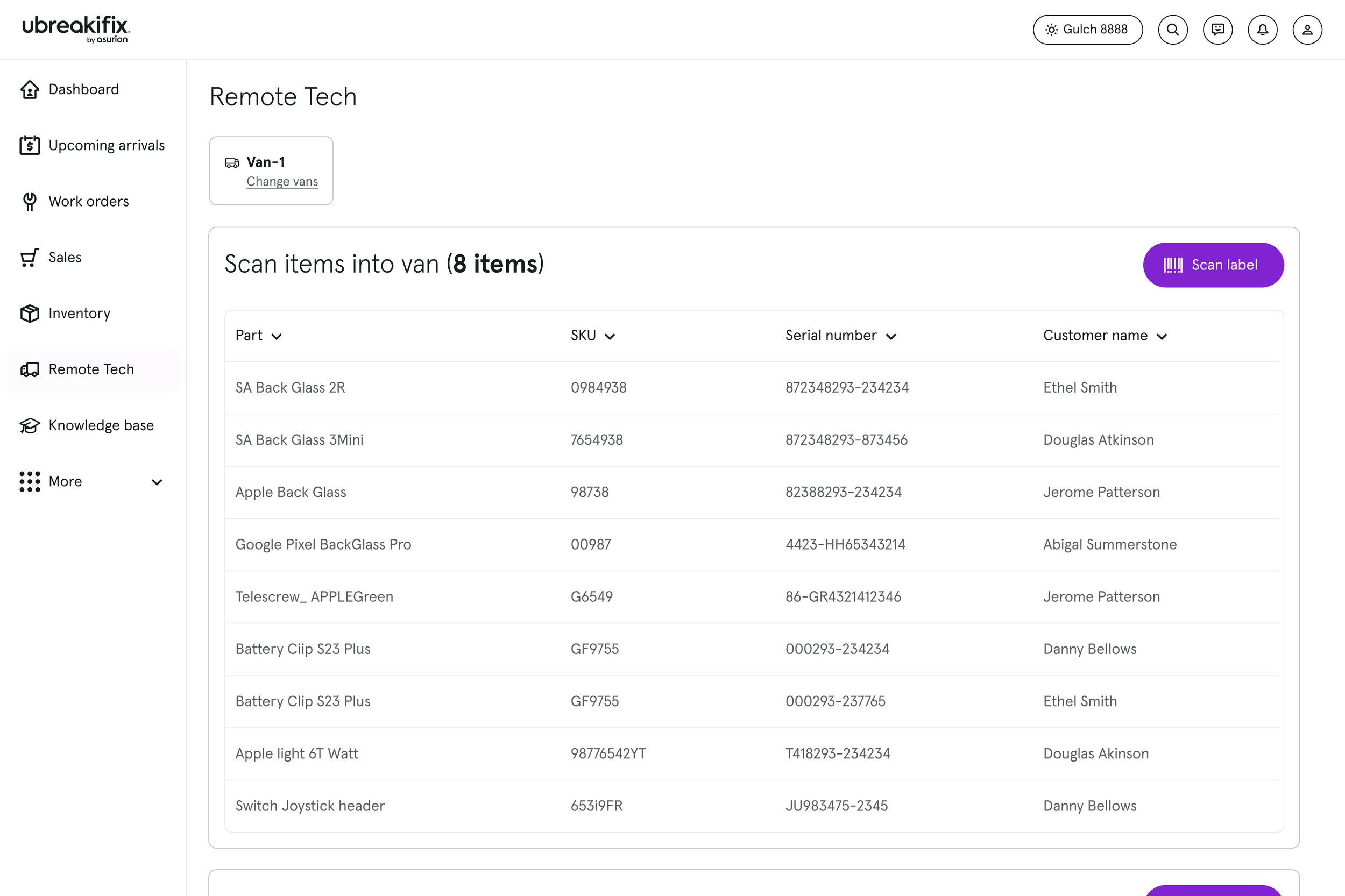
To track inventory, I introduced table patterns that could scale with the program.
To support inventory tracking, I designed a reusable table that reflected how scanned parts moved between backend locations, using color-coded tags to make van inventory easier to identify and manage.
Reusable Patterns
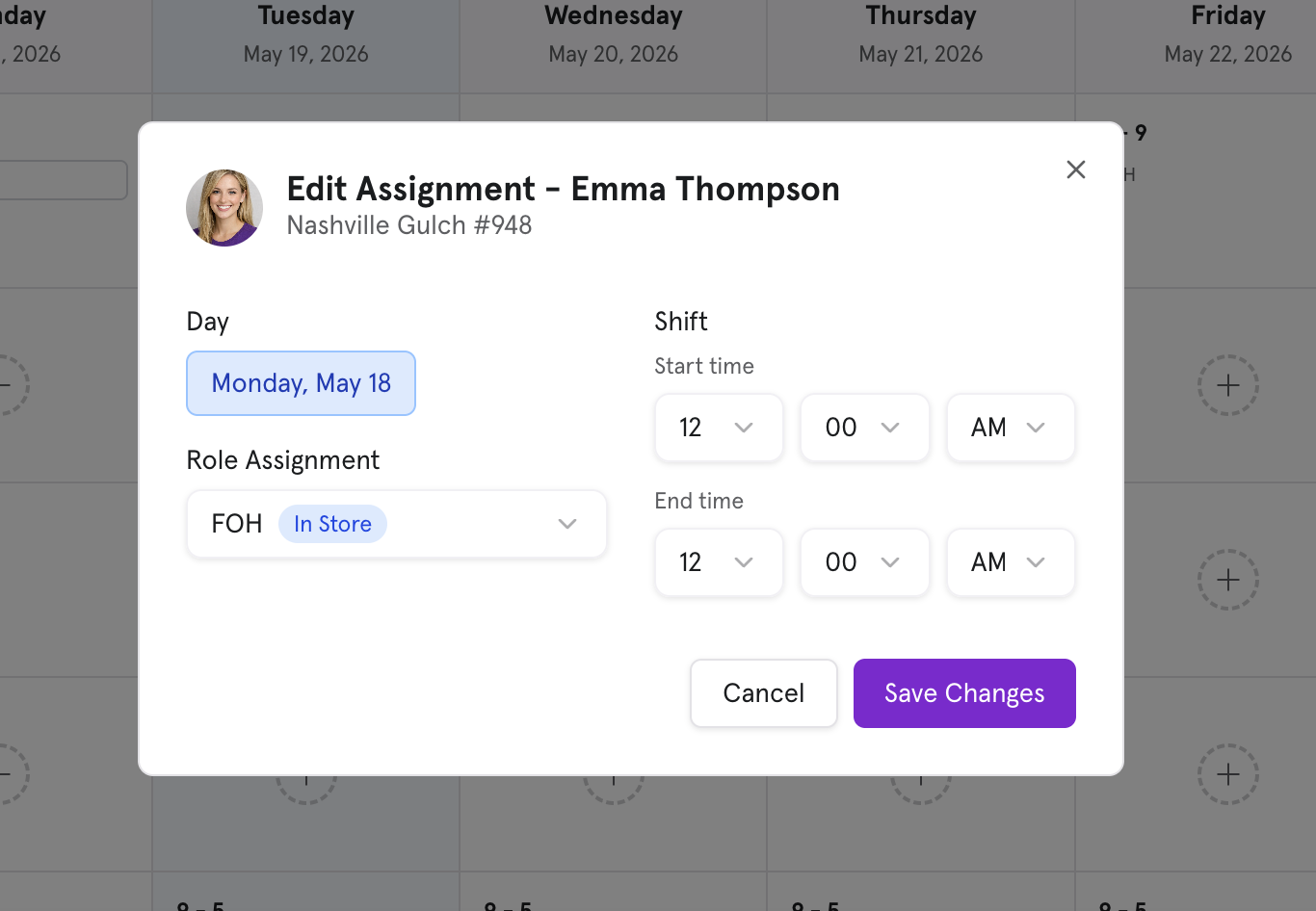
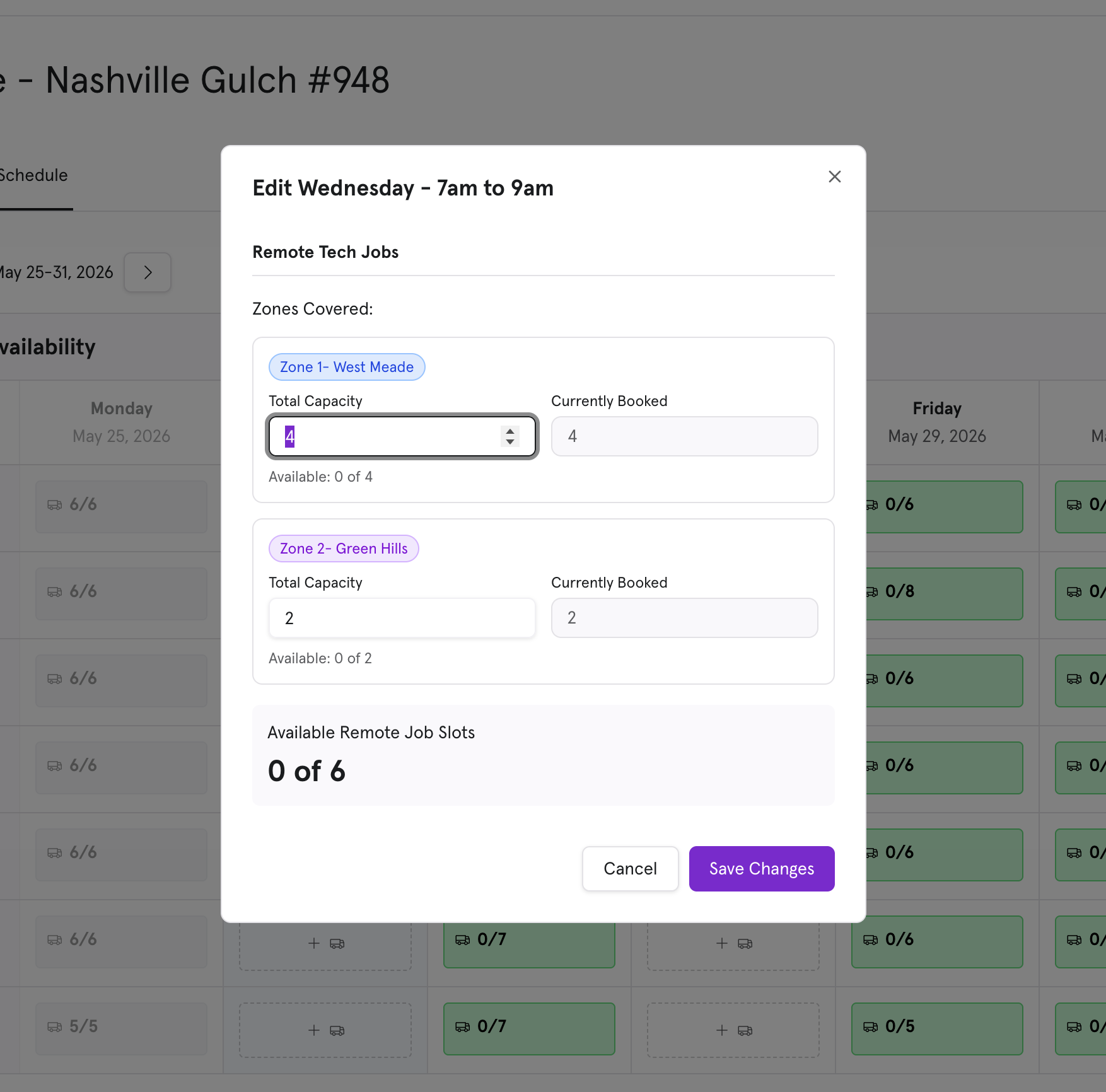
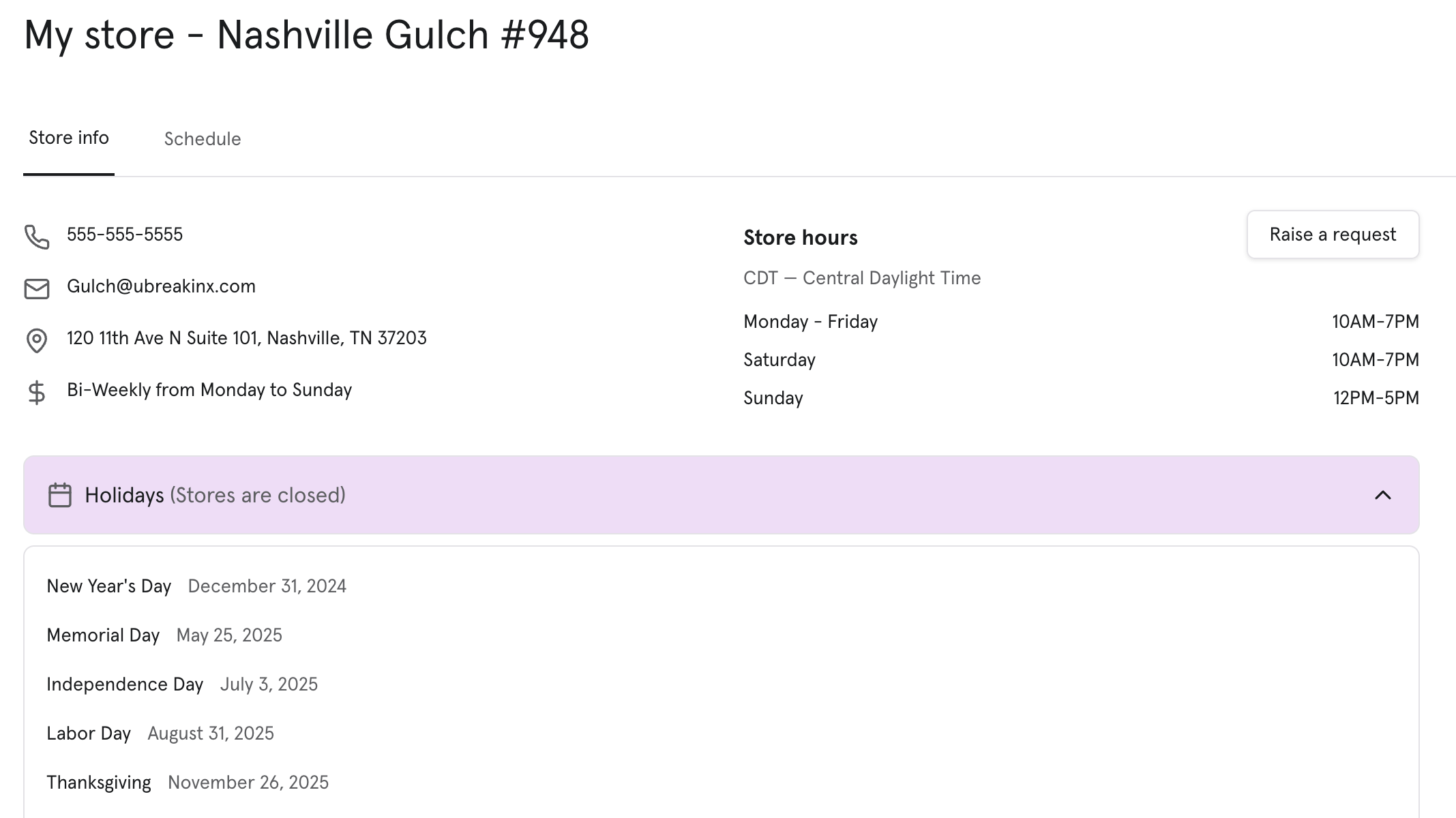
I developed modals and drop-down accordions to show information when needed, and allow for future scaling.
I designed a modal that helped managers quickly understand expert availability and role details, while defining the right information to include. For store management, dropdown accordions kept the page organized and created a flexible structure for future content.
Success + Impact
Designing across the full experience
The product became stronger because we understood the systems, with my discovery work and blueprint facilitation leading the team to build the right thing. My design work also created scalable components that set the foundation for the remaining remote tech redesign.
It was crucial that the first three features be launched on time, so Next Gen Portal could offer Remote Tech repairs without losing operational tools. The pilot would be launched in ten stores, with a rollout to the remaining 254 stores to come.
The largest success was saving 53% in workflow time. For Operations, that meant no more clunky Excel. A 53% savings in time was a substantial reduction for operational costs and manual processing.