
Asurion – 2024
Peloton Repair App
Supporting in-home repair jobs with full service Peloton capabilities
The Context
New Repair Channel
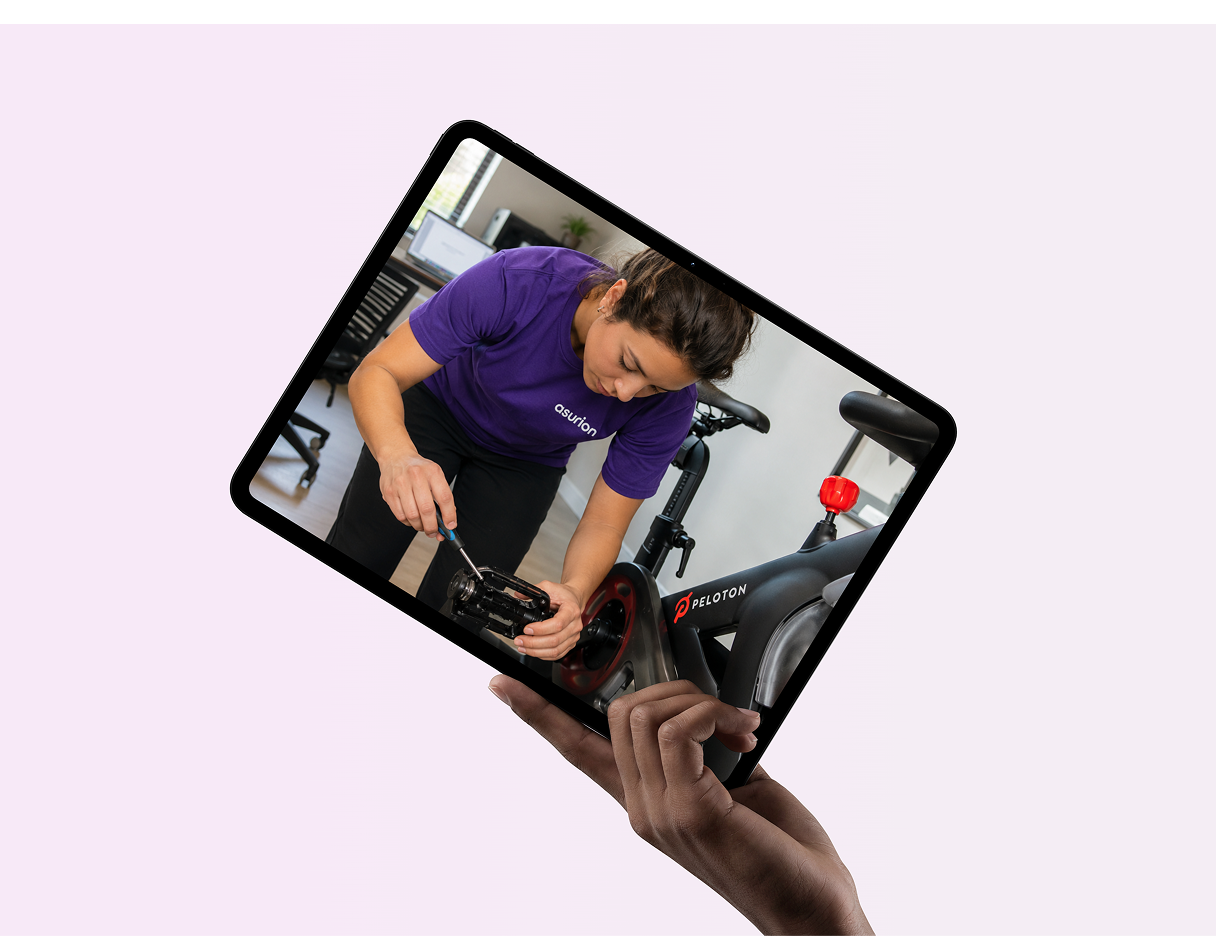
Designing an in-home Peloton repair in the Field app
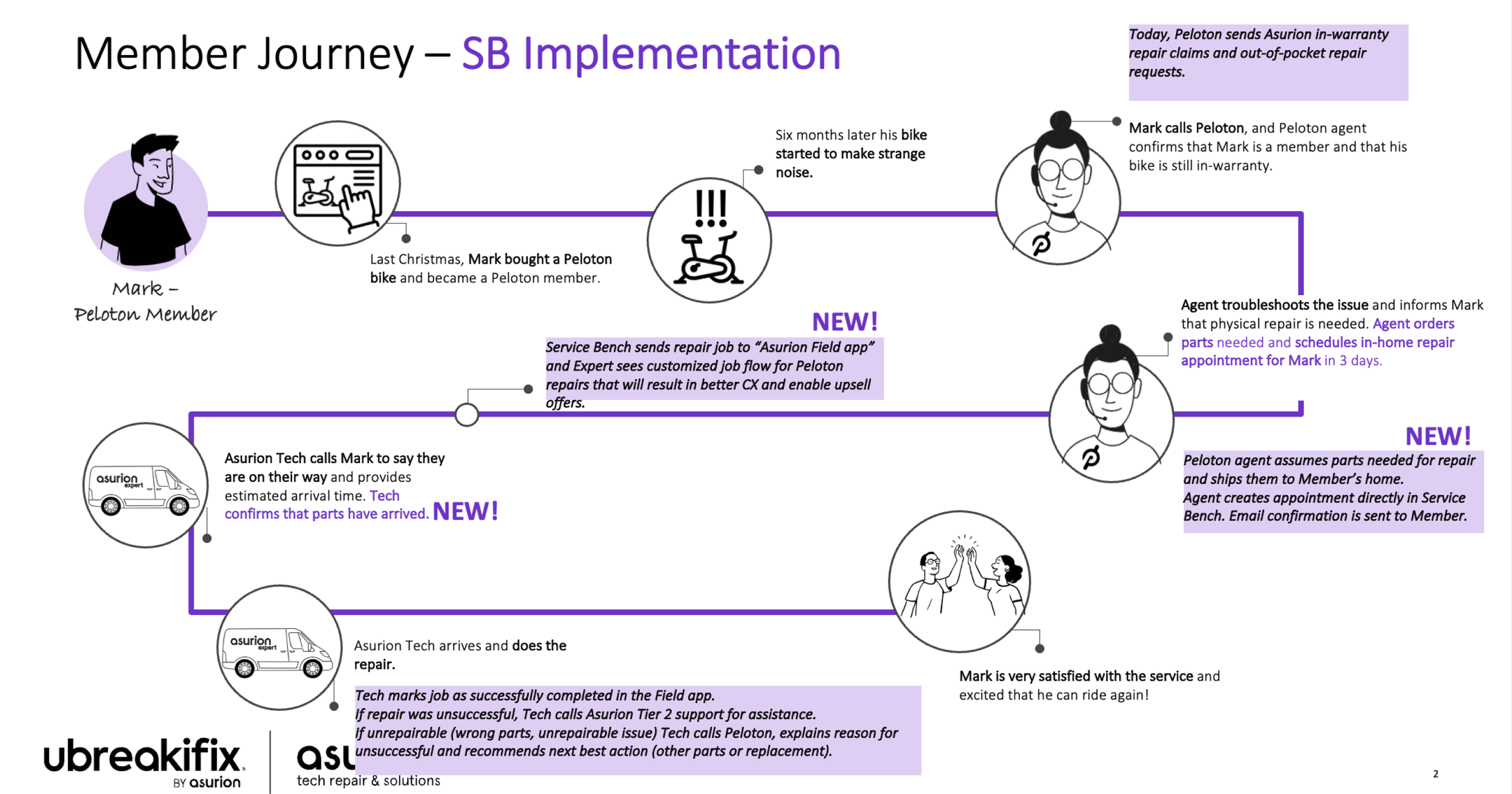
Peloton represented a new business vertical for Asurion’s repair network: in-home machine repair. The goal was to expand the service across 56 markets, with 320 technicians offering the service and a projected revenue opportunity of over $2M per year.
A few uBreakiFix stores were already piloting the program, but the long-term opportunity was to move the workflow into the Field App so experts could manage Peloton jobs through the same enterprise platform used for other in-home repair work.
The Challenge
Program Setup
Connecting the Peloton experience across teams
Before designing the workflow, I needed to understand what had to be in place for Peloton repairs to operate at scale. The program depended on more than a job flow — it required trained and certified experts, required tools in participating stores, parts handling, account setup, and system connections between Portal, Service Bench, and the Field App.
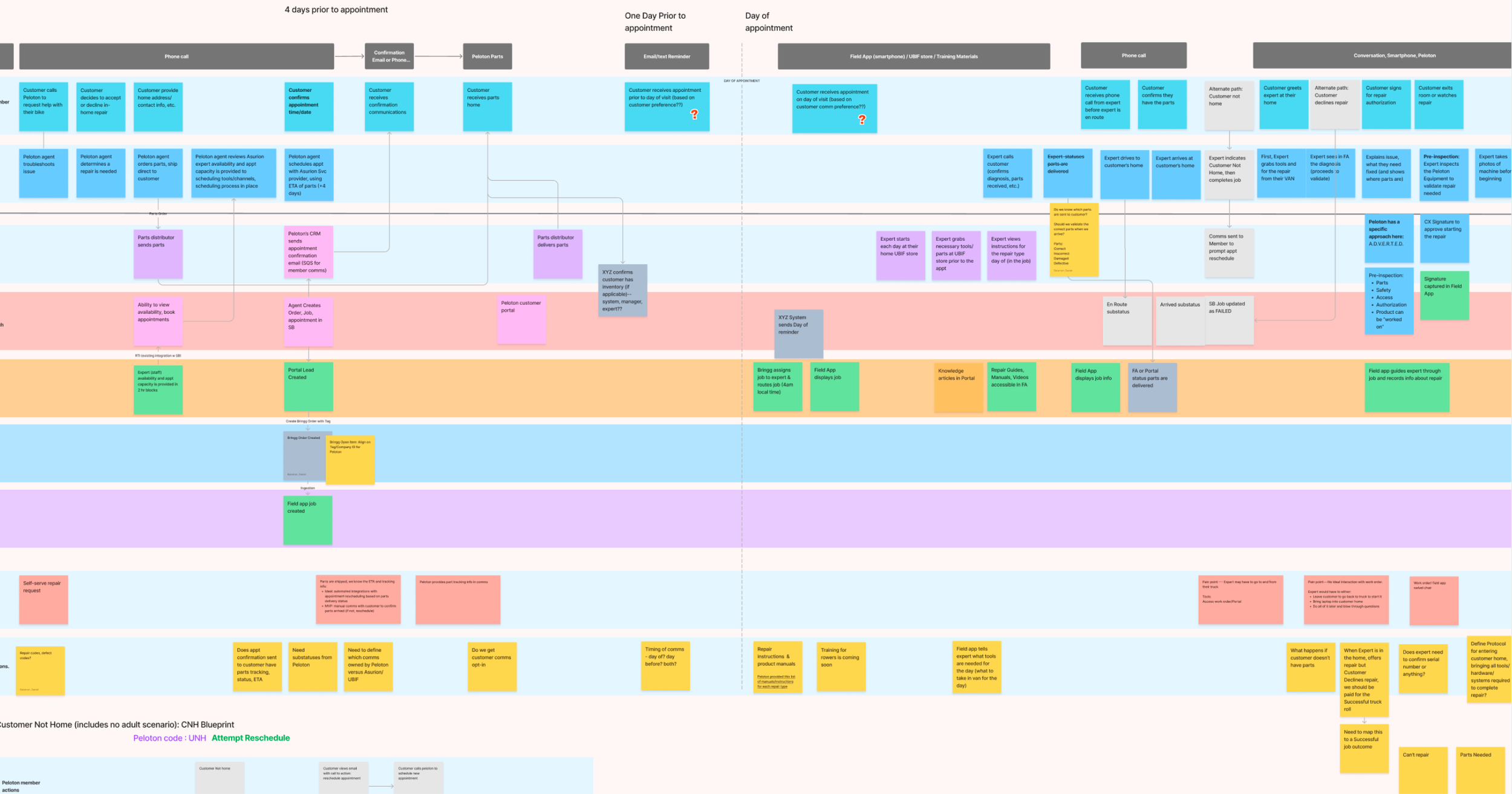
This helped me lead the team through a service blueprint exercise, so we understand the repair ecosystem and any gaps in the system before I started with the UI.
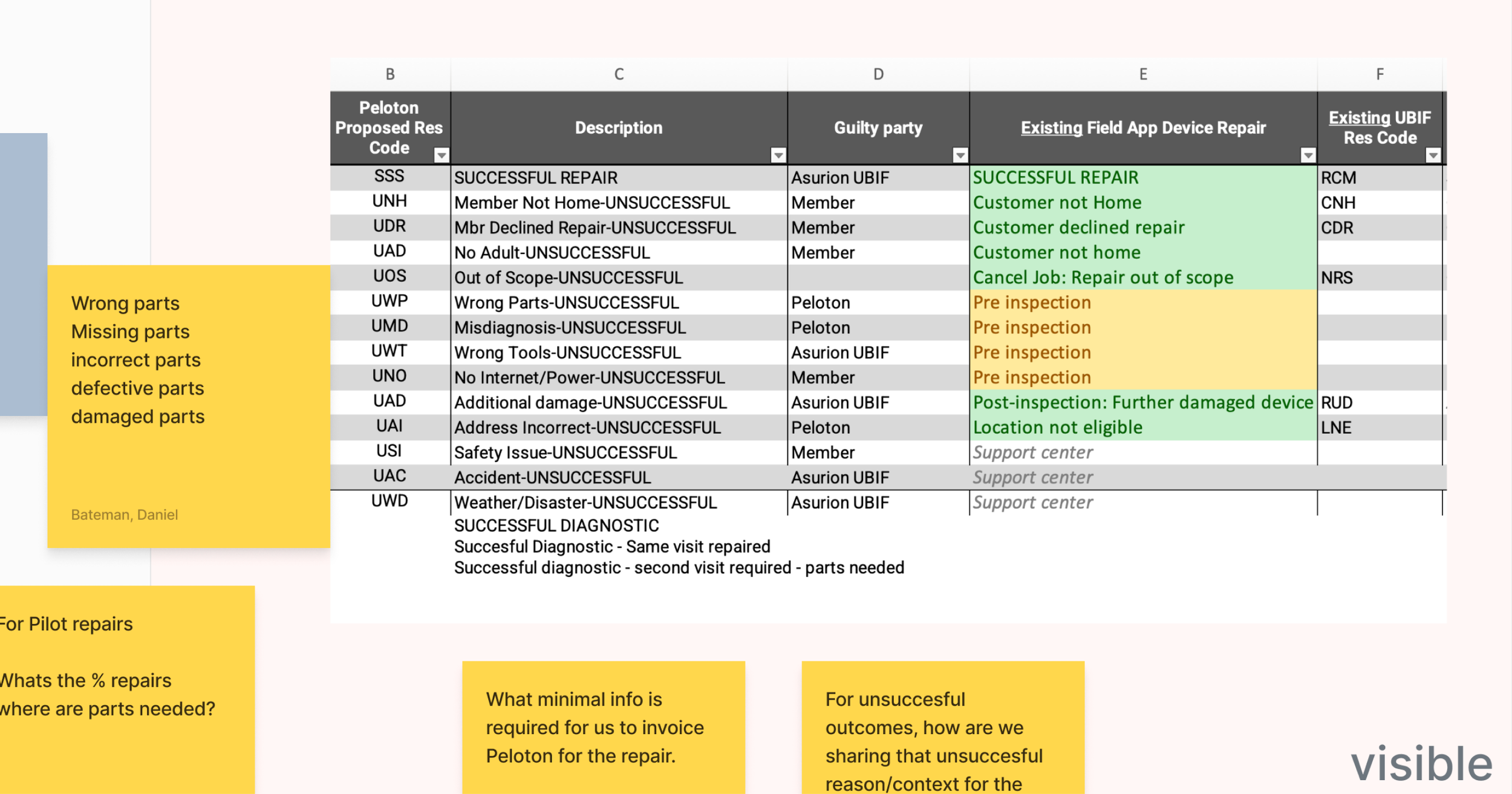
Part of the service design was understanding where reporting was needed, and how to build the UI to effectively capture it. I led mapping sessions with the team to outline all the possibilities in the repair and the connecting codes .
Research + Discovery
In the Field
Understanding the Peloton operational pieces from the start
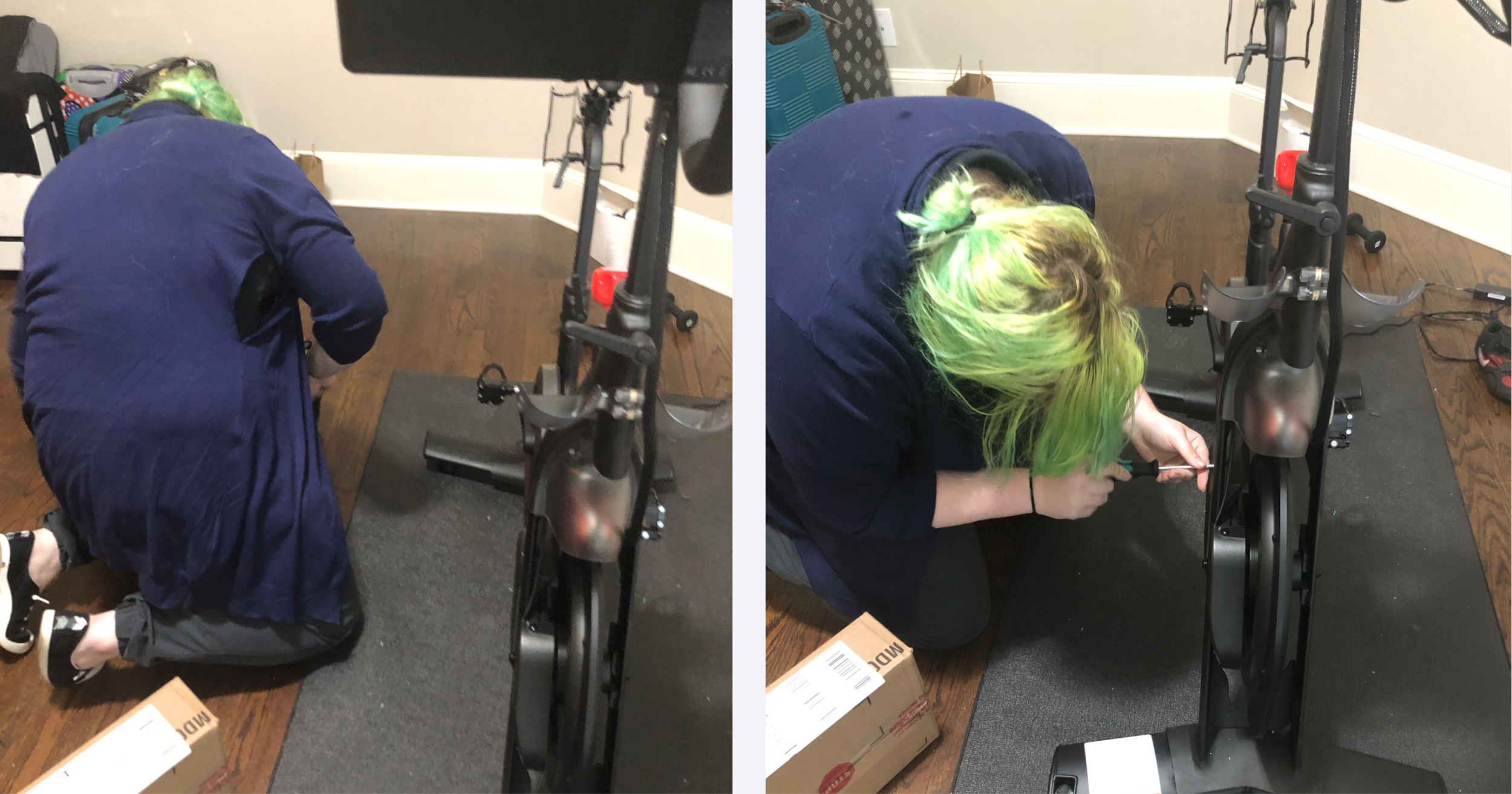
I traveled to Atlanta to observe one uBreakiFix store that was running Peloton repairs through a different app, called Bringg. There was research gold in spending early morning time with those experts and learning how Peloton repairs happened in real life. I watched how experts received jobs, navigated to appointments, diagnosed issues, managed parts, communicated with customers, and completed the work.
Being in the field helped me understand pain points- mainly how can they reschedule an appointment in real time and where the experience needed to support expert decision-making.
Experts were no longer representing only Asurion in the home; they were also carrying the Peloton brand experience, which came with a higher level of customer expectation.
Design Approach
Designing for Scale
Bringing reusable patterns and a new repair workflow into the Field App
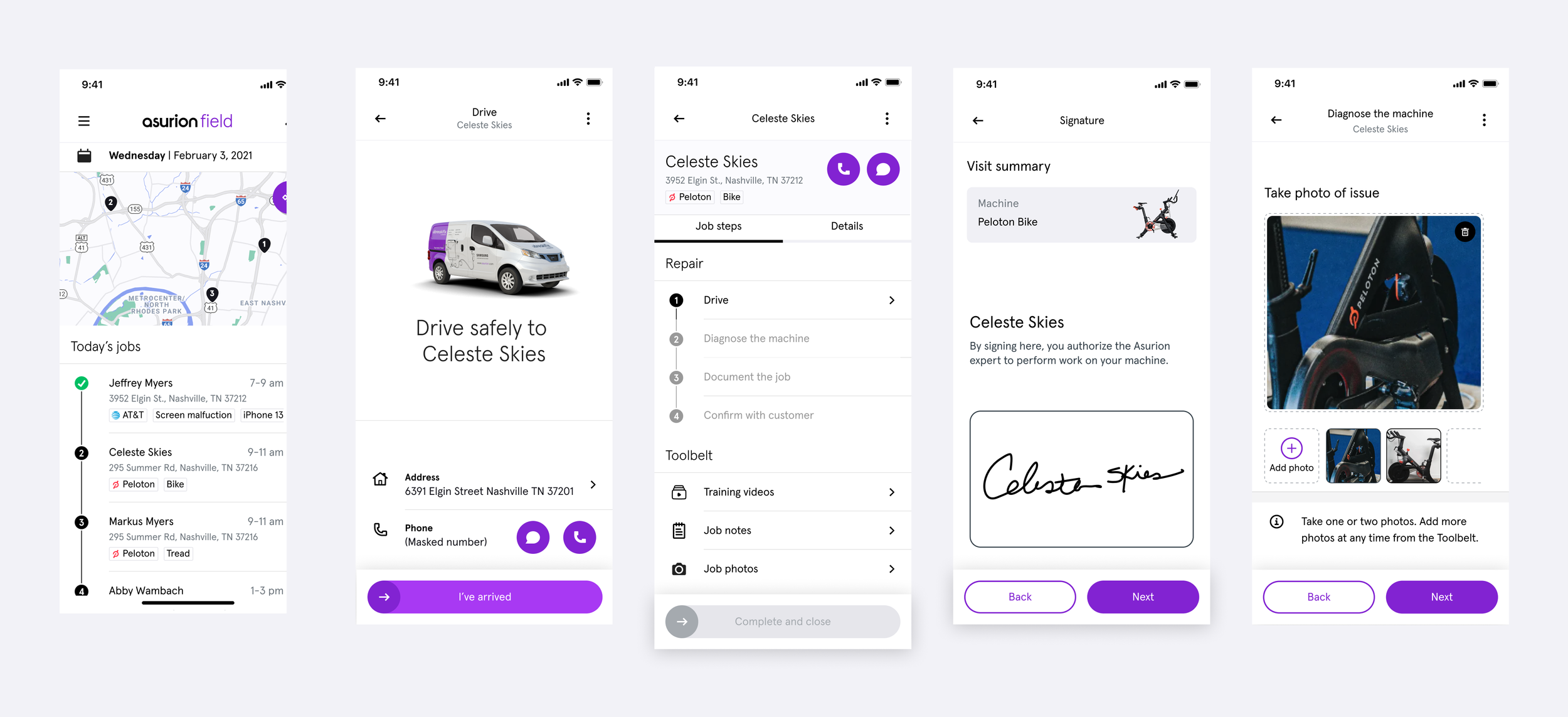
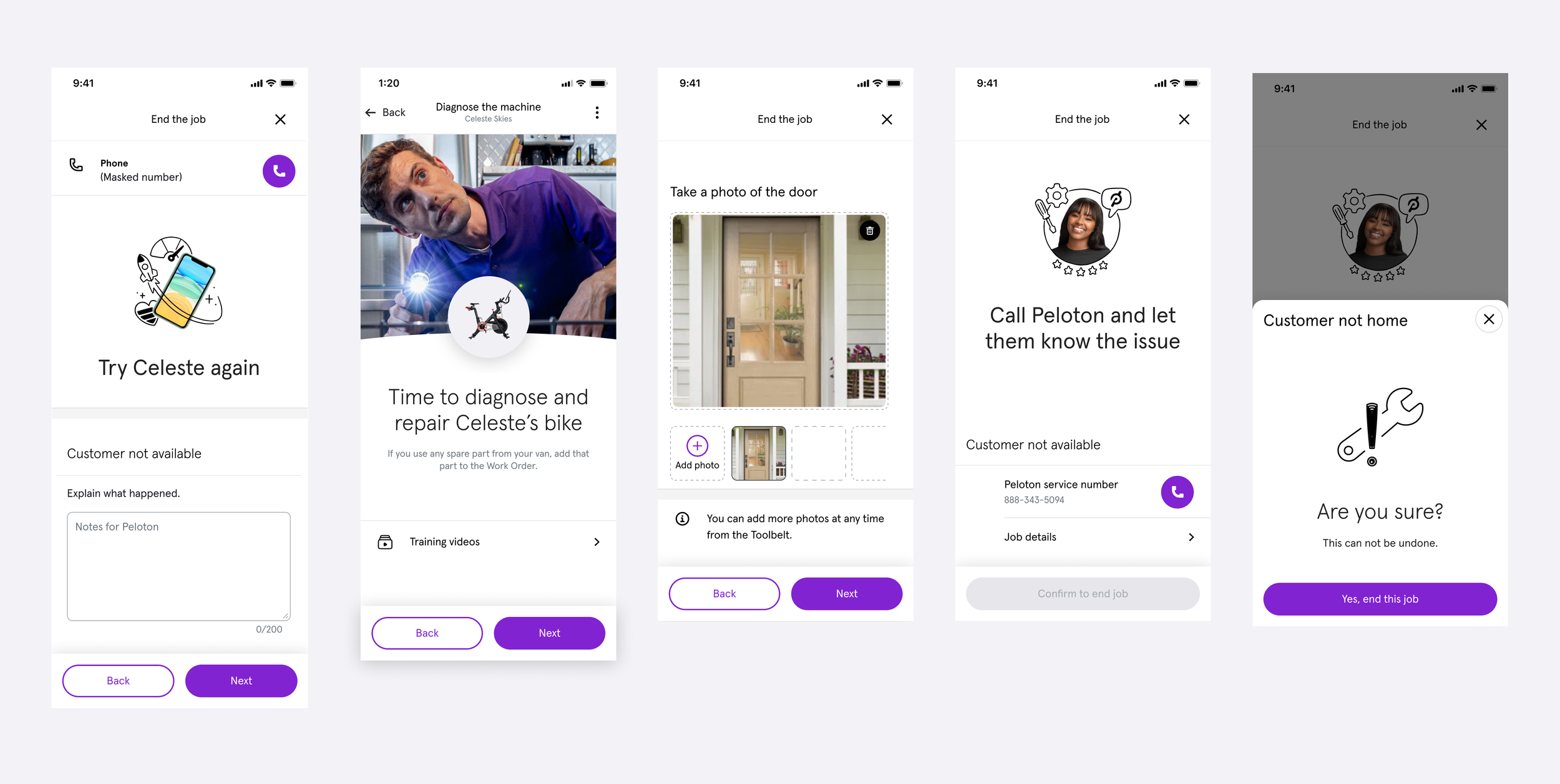
Once the ecosystem was clear, I designed the Peloton repair workflow inside the Field App. The experience needed to support a new type of repair while still feeling consistent with the larger platform.
I incorporated new interaction and visual patterns from the Field App redesign, applying them to Peloton-specific moments like job details, repair steps, parts needs, appointment flow, and completion states. Although the program did not launch because the partner contract ended, the work became a strong example of how future new-channel projects could be approached.
Reflection
Pre-Mortem Strategy
Preparing pilot programs for the possibility of change
The Peloton program did not launch due to contractual agreements, but the design process still created value. It was the most thorough and process driven our team had worked to date, and we aligned stakeholders, clarified the service ecosystem, and introduced reusable Field App patterns. I led fruitful post-mortem retrospective sessions with the team to reflect on our wins and challenges with the program.
In the future, I would introduce a pre-mortem workshop at the start of pilot-only programs to help the team turn uncertainty into a shared plan. By asking, “What would failure look like?” I’d help the team align on risks early and build confidence for future releases.
Pedal on…